Publications
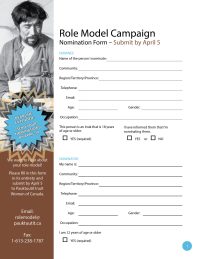
Role Model Nomination Form
Youth, women and men, submit your story and join the role model campaign!
Approximately six people from across Inuit Nunangat will be featured in a video and poster campaign that will share Inuit examples of healthy relationships and how to live free of violence.
The deadline is April 14.
- https://pauktuutit.ca/wp-content/uploads/Role-Model-Campaign-Nomination-2019-English.pdf
- https://pauktuutit.ca/wp-content/uploads/Role-Model-Campaign-Nomination-2019-N-Baffin-Pigiarniq-Fillable.pdf
- https://pauktuutit.ca/wp-content/uploads/Role-Model-Campaign-Nomination-2019-Nunavik-AiPaiNutaaq-Fillable.pdf
Year Published 2019
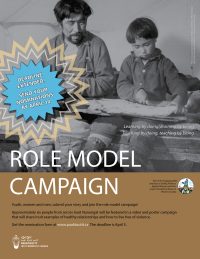
Role Model Campaign Poster
Youth, women and men, submit your story and join the role model campaign!
Approximately six people from across Inuit Nunangat will be featured in a video and poster campaign that will share Inuit examples of healthy relationships and how to live free of violence.
Introduction
This Role Model Campaign seeks to encourage all people – including youth and elders – to share and learn more about what healthy relationships look like in the home, in the community, and in relationships with a boyfriend, girlfriend or spouse. To nominate a role model is to recommend someone who makes you feel safe, who teaches through their actions how to act and be peaceful and shows what it means to live a life free from violence. Those nominated must be 18 years of age or older and can have any gender identity.
The campaign is a way for community members across Inuit Nunangat to acknowledge someone in their daily life who demonstrates characteristics of Inuit societal values that foster healthy relationships, gender equality and a way of living free from violence.
Characteristics of a role model
Respectful
Respectful of all people and the land, makes others feel safe, is trustworthy and treats everyone fairly
When experiencing conflict and you need support, they are trusted
Example: “I could tell them anything. I feel safe and I know they won’t gossip.”
When in a relationship, provides care and respect for their partner
Example: “No matter how they are feeling, they don’t judge, and they take the time to listen and support their partner. They live and share a life free of violence and harm.”
Ready to help
Always ready to help friends, family and the community
Offers to help someone who is experiencing violence at home
Example: “My neighbours noticed that I was facing challenges at home and came to ask me what she could do to help.”
Offers to help someone who is grieving
Example: “My friend noticed that I was going through a tough time and took the time to offer to go out for a long walk together.”
Ready and willing to share
Uses skills and knowledge to help those around them
A community member who is skilled at helping people resolve issues
Example: “My sister-in-law helped my brother and I to find positive solutions.”
A youth at school is attentive to others in the school yard
Example: “When kids start a fight my friend stops them, doesn’t take sides and helps those involved talk it out calmly.”
Welcoming and inclusive
Being welcoming, open and inclusive
A community member whose home offers a safe and welcoming environment
Example: “In their home I feel safe. They never shout. They work to find solutions.”
A community member who always ensures everyone’s participation in all activities, regardless of gender or age
Example: “Our shop teacher invites all students to work together. Girls and boys feel equally welcome and supported.”
Ready and willing to teach and learn
Learns and teaches by doing
An elder takes time to share lessons on how to keep harmony
Example: “After school, my grandmother shares stories to help me learn how to be responsible for my own actions.”
Girls and boys enjoy equal opportunities to feel safe
Example: “Our community hockey coach is honest and respectful and expects us to behave the same way on and off the ice.”
Year Published 2019
- https://pauktuutit.ca/wp-content/uploads/Role-Model-Campaign-Poster-2019-English-1.pdf
- https://pauktuutit.ca/wp-content/uploads/Role-Model-Campaign-Poster-2019-N-Baffin.pdf
- https://pauktuutit.ca/wp-content/uploads/Role-Model-Campaign-Poster-2019-Nunavik.pdf
- https://pauktuutit.ca/wp-content/uploads/Role-Model-Campaign-Poster-2019-Inuvialuit.pdf
- https://pauktuutit.ca/wp-content/uploads/Role-Model-Campaign-Poster-2019-Nunavik-English.pdf
- https://pauktuutit.ca/wp-content/uploads/Role-Model-Campaign-Poster-2019-Nunavut-N-Baffin.pdf
- https://pauktuutit.ca/wp-content/uploads/Role-Model-Campaign-Poster-2019-Nunavut-English.pdf
- https://pauktuutit.ca/wp-content/uploads/Role-Model-Campaign-Poster-2019-Nunatsiavut.pdf

Inuit Women’s Traditional Knowledge Workshop on the Amauti and Intellectual Property Rights
This workshop was the first national consultation with Inuit women in Canada on the issues of protecting their cultural property, traditional knowledge and intellectual property rights. It was also the culmination of several years of research and development. Pauktuutit would like to extend its thanks and appreciation to the many individuals and organizations that made this workshop possible.
Year Published 2001
Proceedings Report: Pauktuutit-Hosted Child & Family Services Legislation Engagement Session
September 18 – 19, 2018, Infinity Centre, Ottawa
https://pauktuutit.ca/wp-content/uploads/Final-Pauktuutit-Proceedings-Report.pdf
Year Published 2018
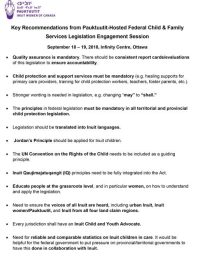
Key Recommendations from Pauktuutit-Hosted Federal Child & Family Services Legislation Engagement Session
September 18 – 19, 2018, Infinity Centre, Ottawa
https://pauktuutit.ca/wp-content/uploads/Final-Key-Recommendations.pdf
Year Published 2018
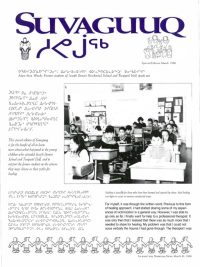
Suvaguuq – Special Edition March 1996
This special edition of Suvaguuq is for the benefit of all to learn more about what happened to the young children who attended Joseph Bernier School and Turquetil Hall, and to support the former students in the options they may choose as their paths for healing.
https://pauktuutit.ca/wp-content/uploads/1996_Suvaguuq.pdf
Year Published 1996
Ikajurniq 2018
Inuit in Canada are experiencing high rates of sexually transmitted and blood-borne infections (STBBIs). While there is limited Inuit-specific statistical information, we know that chlamydia, gonorrhea and syphilis rates in Inuit regions are high. For example, in Nunavut in 2013, where 85% of the population is Inuit, the chlamydia rate was 11 times that of the rest of Canada, and the gonorrhea rate was 27 times higher. In 2014, the syphilis rate was more than 15 times higher. While current rates of HIV in Inuit communities are low, the risk of being infected increases with the presence of other STBBIs. Community stakeholders fear a rapid rise in HIV unless effective prevention and treatment measures are put in place.
https://pauktuutit.ca/wp-content/uploads/IKAJURNIQ_Final_Layout.pdf
Year Published 2018
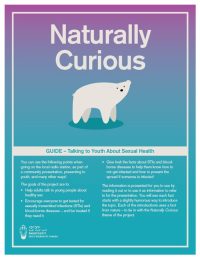
Naturally Curious – Presentation Guide
The project focuses on informing adults about sexual health and to encourage them to educate and influence youth about it and about STBBI testing. The long-term desired outcome is that youth (and adults) will understand what sexual health means and, as a result, they will practice safe sex and seek STBBI testing. While youth are a target audience, it is recognized that adults in the communities need to be supportive of healthy sexual behaviour and be willing to talk about it to create an environment in which young people will see healthy sexuality as the norm.
https://pauktuutit.ca/wp-content/uploads/7046_PIW_STBBI_Radio_Station_Handout_Web.pdf
Year Published 2018
Naturally Curious – Information Booklet
The project focuses on informing adults about sexual health and to encourage them to educate and influence youth about it and about STBBI testing. The long-term desired outcome is that youth (and adults) will understand what sexual health means and, as a result, they will practice safe sex and seek STBBI testing. While youth are a target audience, it is recognized that adults in the communities need to be supportive of healthy sexual behaviour and be willing to talk about it to create an environment in which young people will see healthy sexuality as the norm.
https://pauktuutit.ca/wp-content/uploads/7046_PIW_STBBI_Guide_Web.pdf
Year Published 2018
Understanding the Needs of Urban Inuit Women – Final Report
This report examines Inuit women’s experiences in five major Canadian cities: Edmonton, Winnipeg, Toronto, Ottawa and Montréal. Women’s stories reveal that migration rationale does not usually take the form of a linear and logical sequence of events. Rather, a combination of factors simultaneously pushes them away from their hometowns and pulls them into cities. While some women actively seek better opportunities in southern urban centres, the cost of housing and poor-quality services in the North also push them into migration pathways. Many interviews revealed that living in the city often felt like a “consequence” rather than a personal choice.
https://pauktuutit.ca/wp-content/uploads/358996508-Final-Report-UAS-Urban-Research-April-2017.pdf”
Year Published 2017
Fact Sheet: Why do Inuit women move South?
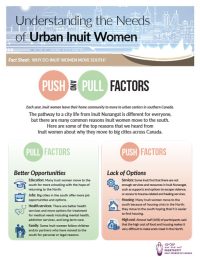
Each year, Inuit women leave their home community to move to urban centers in southern Canada. The pathway to city life from Inuit Nunangat is different for everyone, but there are many common reasons Inuit women move to the south. Here are some of the top reasons that we heard from Inuit women about why they move to big cities across Canada.
https://pauktuutit.ca/wp-content/uploads/UAS_factsheet_push_pull_factors.pdf
Year Published 2018
Fact Sheet: Safety and Violence
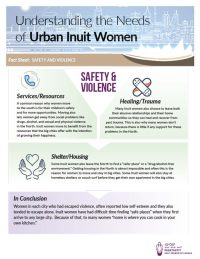
Women in each city who had escaped violence, often reported low self-esteem and they also tended to escape alone. Inuit women have had a difficult time finding “safe places” when they first arrive in any large city. Because of that, to many women “home is where you can cook in your own kitchen.”
https://pauktuutit.ca/wp-content/uploads/UAS_factsheet_safety_violence.pdf
Year Published 2018
Annual Reports
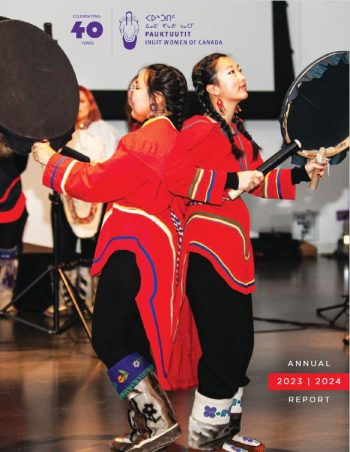
2023-2024 Annual Report
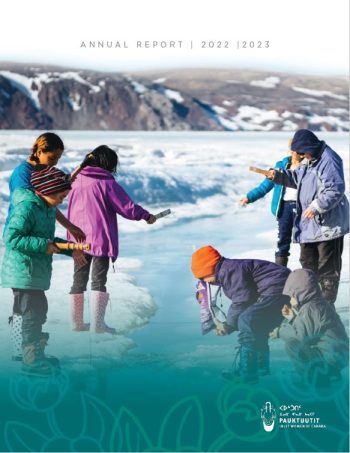
2022-2023 Annual Report
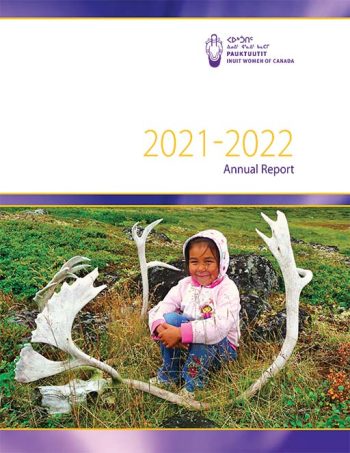
2021-2022 Annual Report
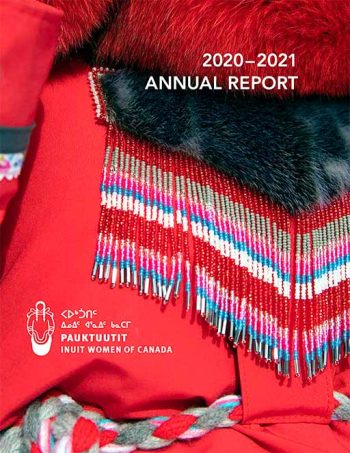
2020-2021 Annual Report
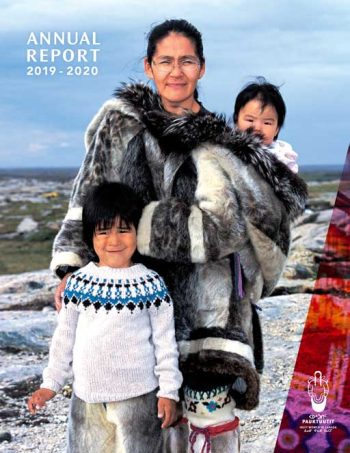
2019-2020 Annual Report
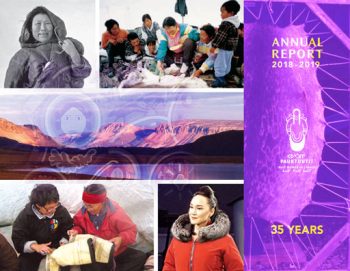
2018-2019 Annual Report
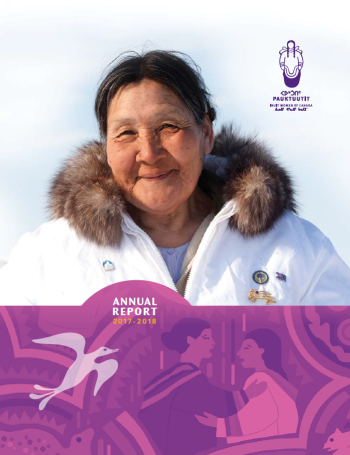
2017-2018 Annual Report
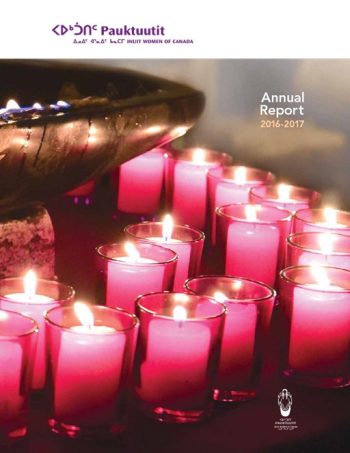
2016-2017 Annual Report
2015-2016 Annual Report
2014-2015 Annual Report
2013-2014 Annual Report
2012-2013 Annual Report
2011-2012 Annual Report
2010-2011 Annual Report
2009-2010 Annual Report
2008-2009 Annual Report
2007-2008 Annual Report
2006-2007 Annual Report
2005-2006 Annual Report
2003-2004 & 2004-2005 Annual Report
2002-2003 Annual Report
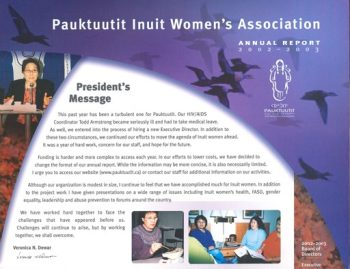
2001-2002 Annual Report
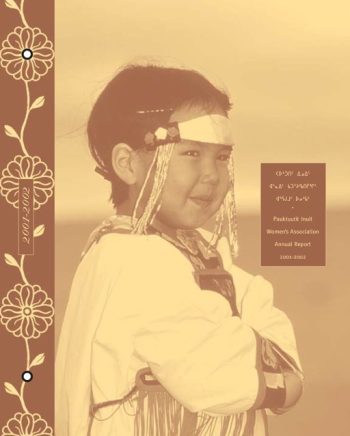
2000-2001 Annual Report
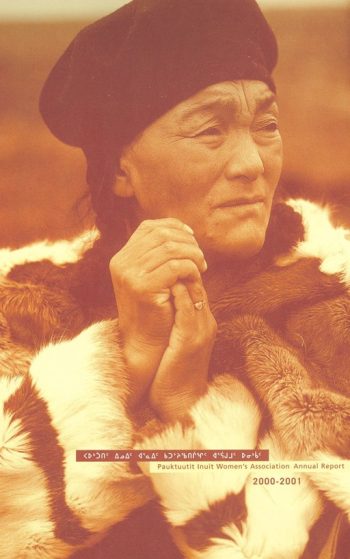
1999-2000 Annual Report
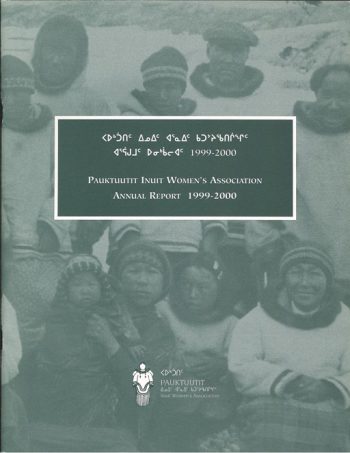
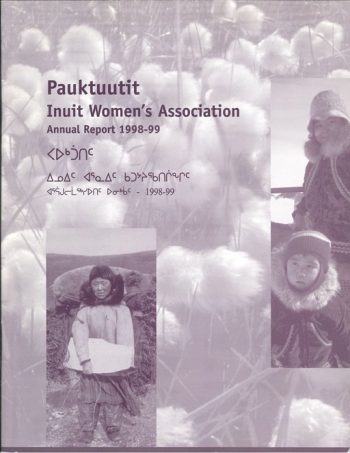
1998-1999 Annual Report
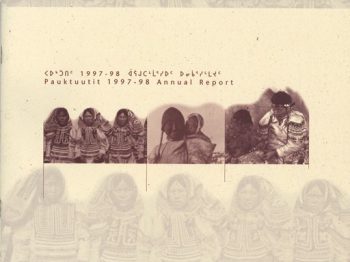
1997-1998 Annual Report
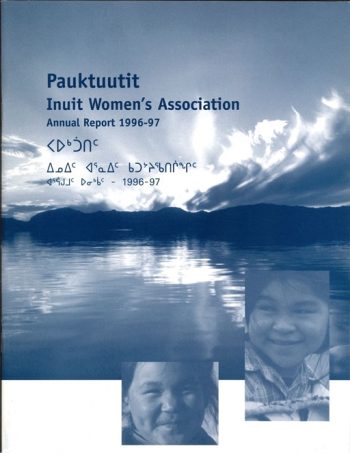
1996-1997 Annual Report
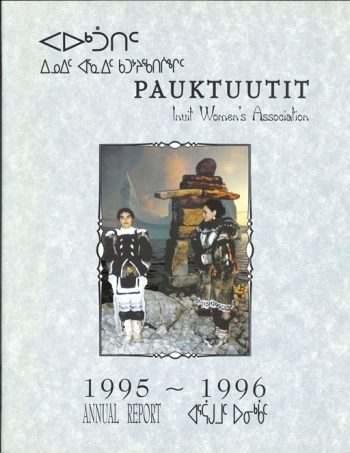
1995-1996 Annual Report
1994-1995 Annual Report
1993-1994 Annual Report
1992-1993 Annual Report
1991-1992 Annual Report
1990-1991 Annual Report
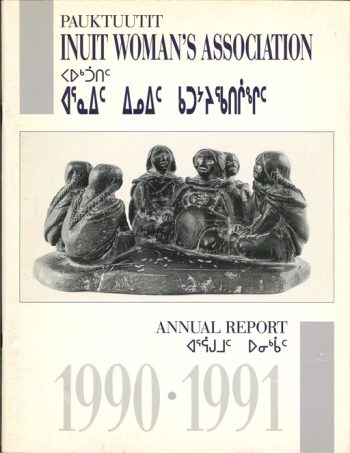
1989-1990 Annual Report
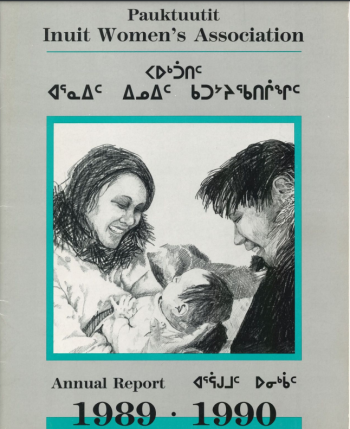
1988-1989 Annual Report
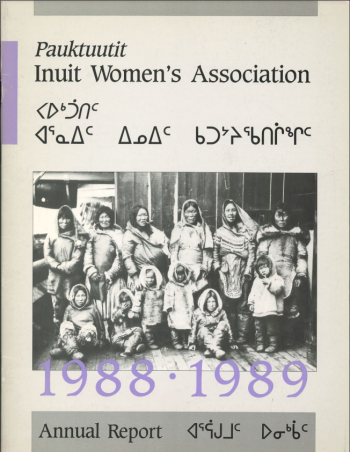
1987-1988 Annual Report
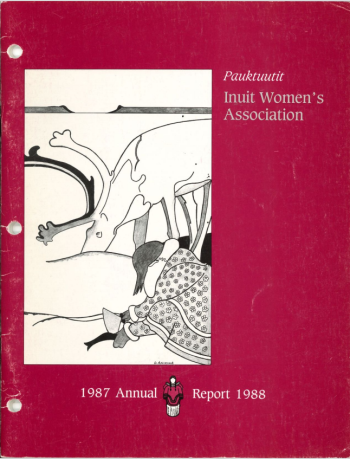
1986-1987 Annual Report
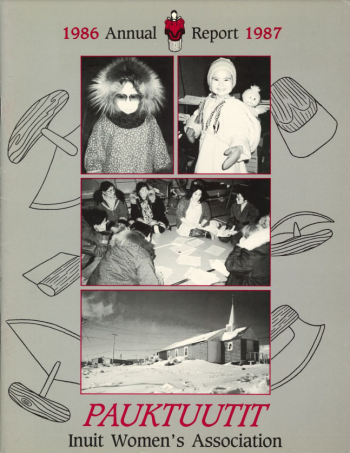
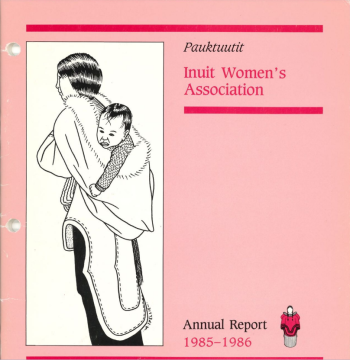
1985-1986 Annual Report
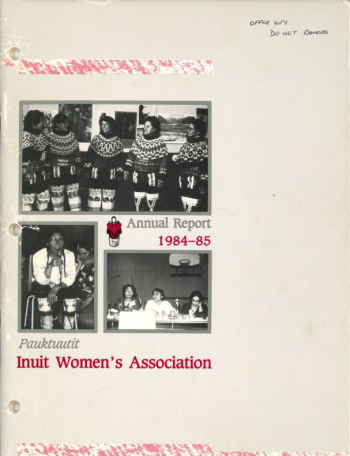
1984-1985 Annual Report
Policy Briefs
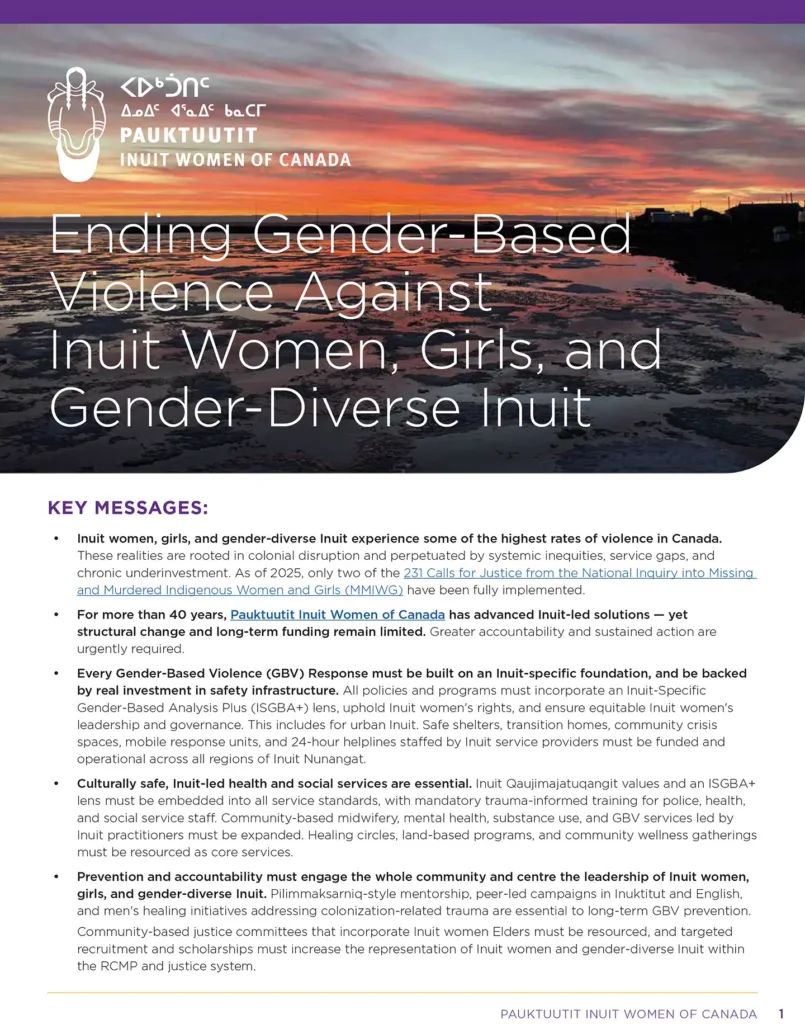
Ending Gender-Based Violence Against Inuit Women, Girls, and Gender-Diverse Inuit
Inuit Justice Revitalization
Expand Sexually Transmitted Blood Borne Infection (STBBI) Testing, Screening, and Treatment Services Throughout Inuit Nunangat
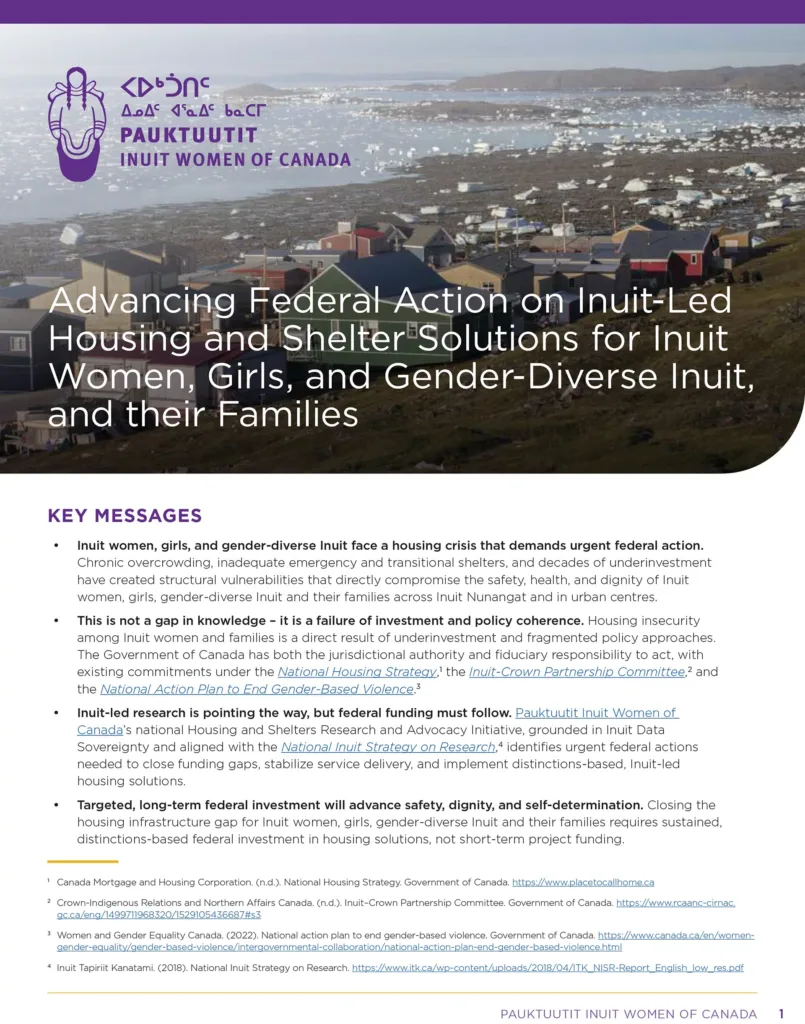
Advancing Federal Action on Inuit‑Led Housing and Shelter Solutions for Inuit Women, Girls, and Gender‑Diverse Inuit, and their Families
Missing and Murdered Indigenous Women, Girls, and 2SLGBTQQIA+ People (MMIWG2S+)
Research and Data – Inuit Women, Girls, and Gender-Diverse Inuit
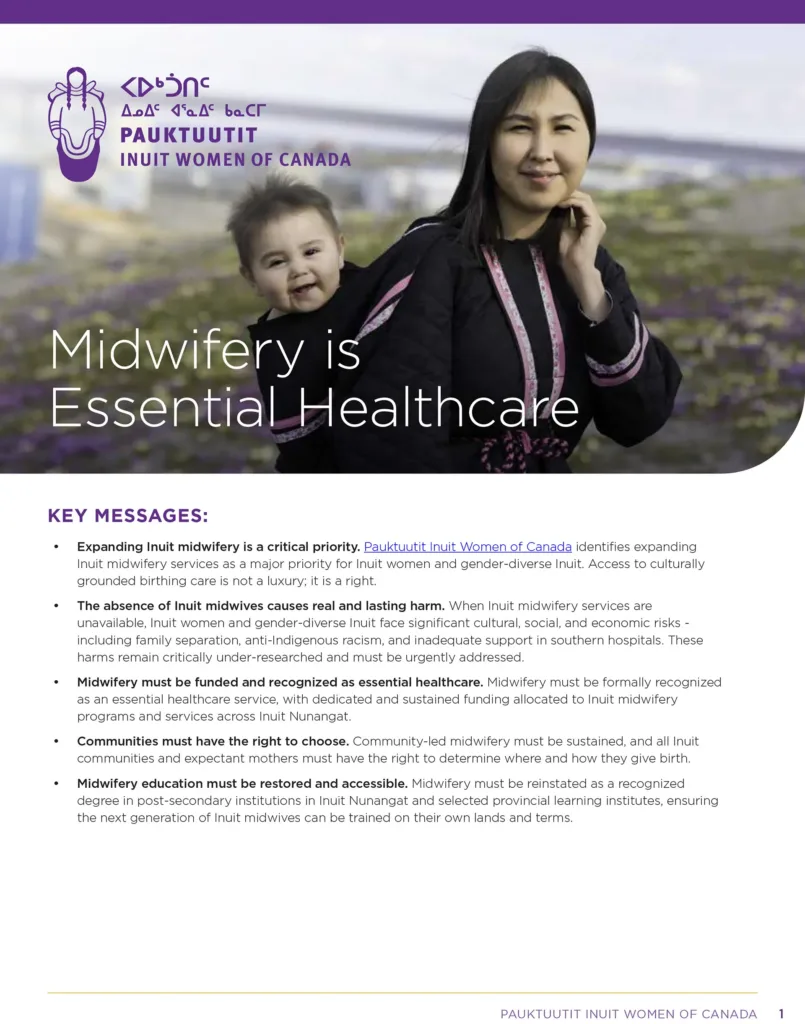
Midwifery is Essential Healthcare
Impacts of Resource Extraction: Employment and Gender‑Based Violence